

-
Faculty of Arts and HumanitiesJakobi 2, r 116-121, 51005 Tartu linn, Tartu linn, TartumaaJakobi 2, 51005 Tartu linn, Tartu linn, TartumaaJakobi 2, IV korrus, 51005 Tartu linn, Tartu linn, TartumaaJakobi 2, III korrus, ruumid 302-337, 51005 Tartu linn, Tartu linn, TartumaaÜlikooli 16, 51003 Tartu linn, Tartu linn, TartumaaÜlikooli 18, 50090 Tartu linn, Tartu linn, TartumaaLossi 3, 51003 Tartu linn, Tartu linn, TartumaaPosti 1, 71004 Viljandi linn, ViljandimaaJakobi 2, 51005 Tartu linn, Tartu linn, TartumaaJakobi 2, 51005 Tartu linn, Tartu linn, TartumaaFaculty of Social SciencesLossi 36, 51003 Tartu linn, Tartu linn, TartumaaJakobi 5, 51005 Tartu linn, Tartu linn, TartumaaLossi 36, ruum 301, 51003 Tartu linn, Tartu linn, TartumaaNarva mnt 18, 51009 Tartu linn, Tartu linn, TartumaaNäituse 2, 50409 Tartu linn, Tartu linn, TartumaaNäituse 20 - 118, 50409 Tartu linn, Tartu linn, TartumaaLossi 36, 51003 Tartu linn, Tartu linn, TartumaaRaekoja plats 2, 20307 Narva linn, Ida-VirumaaRingi 35, 80012 Pärnu linn, Pärnu linn, PärnumaaLossi 36, 51003 Tartu linn, Tartu linn, TartumaaLossi 36, 51003 Tartu linn, Tartu linn, TartumaaFaculty of MedicineRavila 19, 50411 Tartu linn, Tartu linn, TartumaaBiomeedikum, Ravila 19, 50411 Tartu linn, Tartu linn, TartumaaNooruse 1, 50411 Tartu linn, Tartu linn, TartumaaL. Puusepa 1a, 50406 Tartu linn, Tartu linn, TartumaaL. Puusepa 8, 50406 Tartu linn, Tartu linn, TartumaaRavila 19, 50411 Tartu linn, Tartu linn, TartumaaUjula 4, 51008 Tartu linn, Tartu linn, TartumaaRavila, 50411 Tartu linn, Tartu linn, TartumaaRavila 19, 50411 Tartu linn, Tartu linn, TartumaaFaculty of Science and TechnologyVanemuise 46 - 208, 51003 Tartu linn, Tartu linn, TartumaaNarva mnt 18, 51009 Tartu linn, Tartu linn, TartumaaRavila 14a, 50411 Tartu linn, Tartu linn, TartumaaNarva mnt 18, 51009 Tartu linn, Tartu linn, TartumaaRiia 23, 23b - 134, 51010 Tartu linn, Tartu linn, TartumaaNooruse 1, 50411 Tartu linn, Tartu linn, TartumaaJ. Liivi tn 2, 50409 Tartu linn, Tartu linn, TartumaaRiia 23b/2, 51010 Tartu linn, Tartu linn, TartumaaVanemuise 46, 51003 Tartu linn, Tartu linn, TartumaaVanemuise 46, 51003 Tartu linn, Tartu linn, TartumaaArea of RectorArea of Vice Rector for Academic AffairsUppsala 10, 51003 Tartu linn, Tartu linn, TartumaaÜlikooli 18b, 51005 Tartu linn, Tartu linn, TartumaaÜlikooli 18a (III korrus), 51005 Tartu linn, Tartu linn, TartumaaArea of Vice Rector for ResearchW. Struve 1, 50091 Tartu linn, Tartu linn, TartumaaArea of Director of AdministrationÜlikooli 18, ruumid 102, 104, 209, 210, 50090 Tartu linn, Tartu linn, TartumaaÜlikooli 18A (III korrus), 51005 Tartu linn, Tartu linn, TartumaaArea of Head of FinanceÜlikooli 17, 51005 Tartu linn, Tartu linn, TartumaaArea of Vice Rector for DevelopmentLossi 25, 51003 Tartu linn, Tartu linn, TartumaaVanemuise 46, 51003 Tartu linn, Tartu linn, TartumaaNarva mnt 18, 51009 Tartu linn, Tartu linn, TartumaaArea of Academic SecretaryUppsala 6, Lossi 36, 51003 Tartu linn, Tartu linn, Tartumaa
Topic: research

Best speakers in three-minute thesis competition focused on expressing uncertainty and waste gas-eating bacteria
The three-minute thesis competition for doctoral researchers, held at the University of Tartu Library on 22 October, featured 13 popular-science short lectures in Estonian and 14 in English.

University of Tartu is the only research institution in Estonia to be positively evaluated in all six fields of research
On 23 May 2025, Minister of Education and Research Kristina Kallas approved the results of the external evaluation of Estonian research and development. The University of Tartu was the only institution in Estonia to receive a positive evaluation in all six fields: natural sciences, engineering and technology, medical and health sciences, agriculture and veterinary sciences, social sciences, and humanities and the arts.

University of Tartu research award for 2024 went to Centre for Climate Research for discovery about anthropogenic air pollution
The University of Tartu research award 2024 went to an extraordinary discovery that in industrial hot spots, anthropogenic air pollution causes snowfall and reduces cloud cover.

Laser demonstration on JET detects fusion fuels
Scientists at the Plasma Physics Laboratory of the University of Tartu, in collaboration with partners from eight countries, have successfully used lasers to measure the fuel levels in the walls of the world's only deuterium-tritium-fuelled tokamak reactor, the Joint European Torus (JET).

Institute of Physics hosted a delegation from the Rezekne Academy of Technologies and Riga Technical University
Institute of Physics hosted a delegation from the Rezekne Academy of Technologies and Riga Technical University to explore the opportunities for international collaboration

Industrial snow: Factories trigger local snowfall by freezing clouds
Anthropogenic aerosols, tiny solid and liquid air pollution particles, have masked a fraction of global warming caused by anthropogenic greenhouse gases.
27 November 2024
research

University of Tartu is adopting experience of creating antibacterial surfaces
The University of Tartu is advancing its research on antibacterial surfaces through the European Commission-funded Twinning project, FAST-Real ("Twinning on Functional Antimicrobial Surfaces Testing and Evaluation for Real-world Performance and Sustainability").
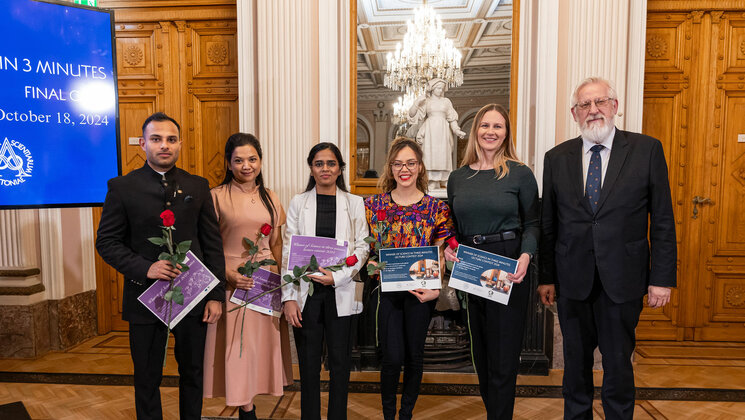
Doctoral students Francis Gracy Arockiaraj and Baiba Brumele ranked in top five in the English competition of “Science in 3 minutes”
Two participants from the University of Tartu made it to the top five at the finals of the first-ever English edition of the “Science in 3 minutes” contest.
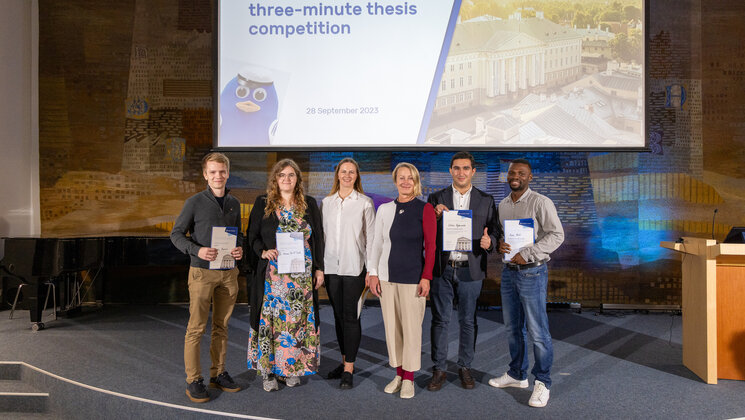
Five international doctoral students from the University of Tartu to participate in the English-edition gala of the Estonian Academy of Sciences' competition “Science in 3 minutes”
On Friday, 18 October, starting at 18:00, the final gala of the Estonian Academy of Sciences' English-language competition “Science in 3 minutes” will take place.
15 October 2024
research
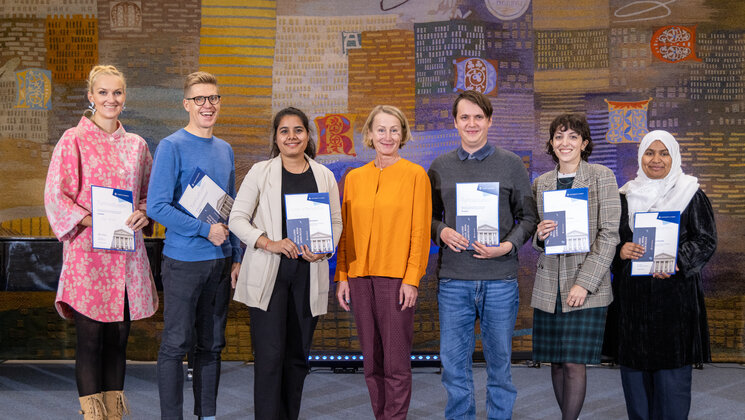
Doctoral students presented inspiring research stories at the three-minute thesis competition
The competition’s best short lectures focused on innovation in medicine, ancient dental calculus, the theological currents among the Estonian clergy, and six-dimensional imaging.
03 October 2024
research
